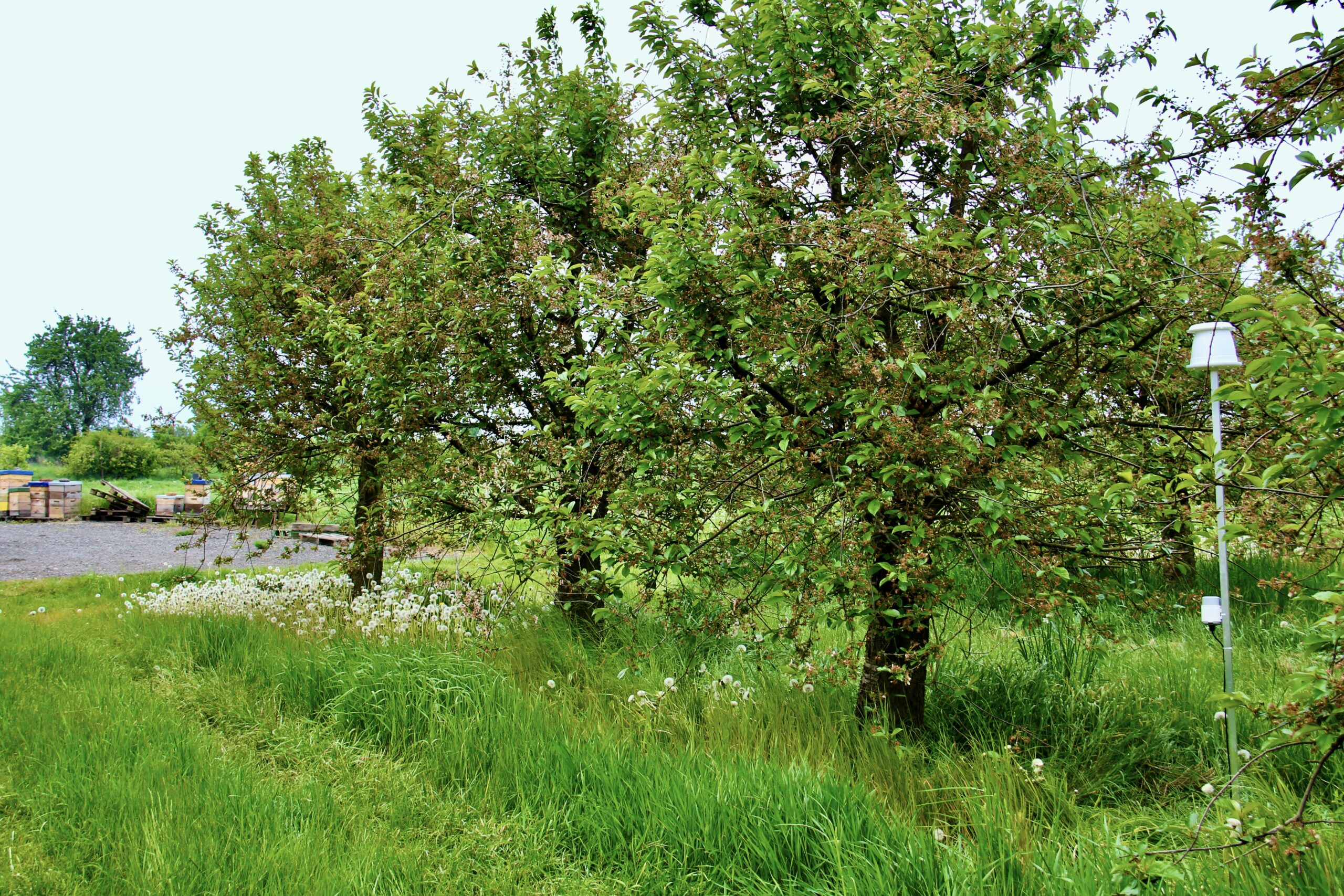
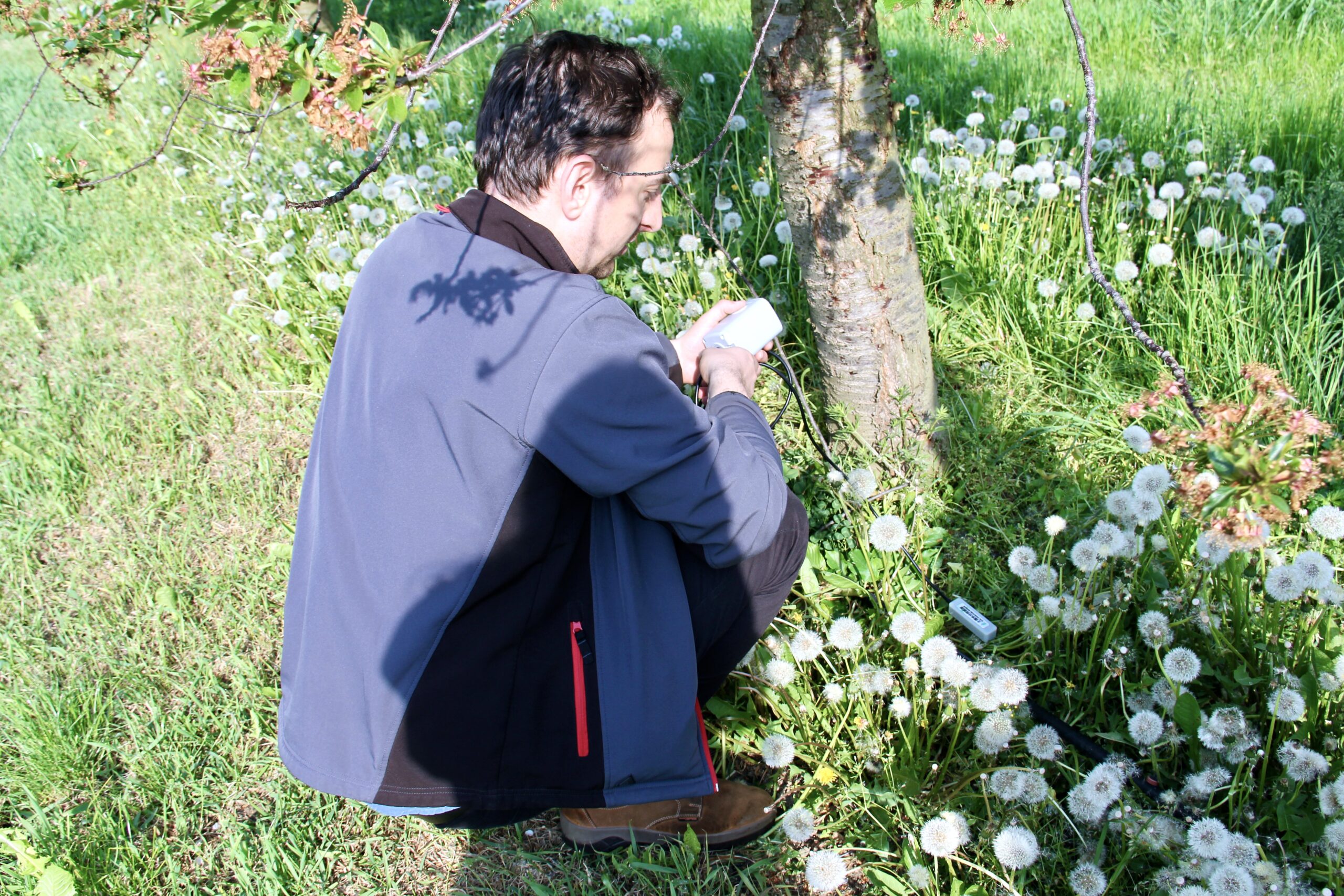
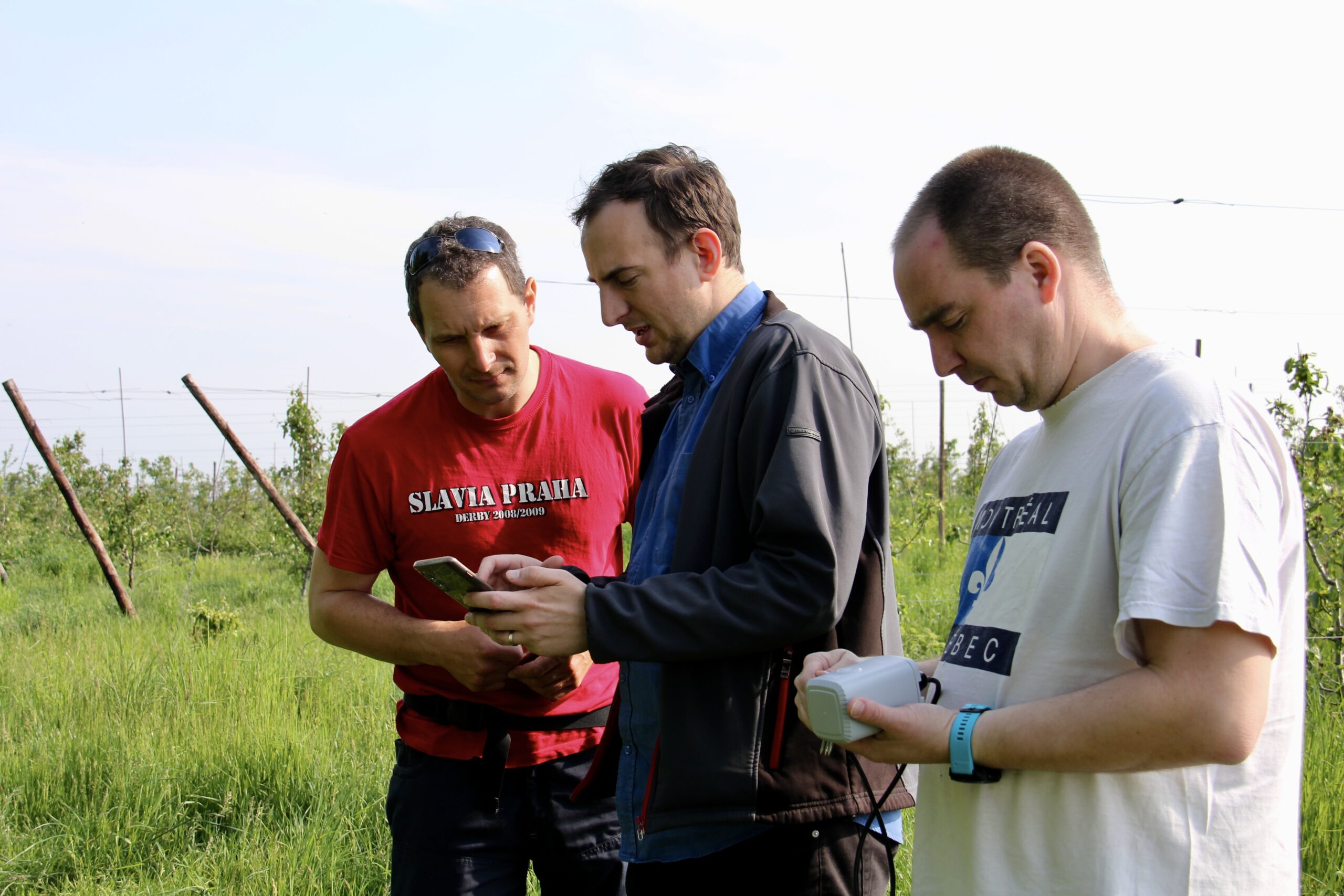
As part of the CODECS project, the BROMIL orchard was digitised and a sensory solution was required to measure humidity, air temperature and soil. Given the size of the orchard, it was decided to install four measuring points. Their distribution takes into account the slope of the plot, with sensors installed, for example, at the lowest and highest points of the plot. Controlled irrigation is installed in the set, the location of which also takes into account the technology of the irrigation system. The irrigation is solved in the form of hose lines with individual nozzles that provide drip irrigation. The individual irrigation sections are regulated by electronically controlled valves from the central system (using PLC). The limiting factor for the installation of the technologies was that the measurement site should not interfere with the normal operation of the orchard, such as harvesting, tree care, grass cutting, etc. A system was therefore designed using advanced battery-powered sensors based on LoRaWAN wireless technology, which minimises the technological requirements at the measurement site. Thanks to their small size and particularly low weight, the sensors could be installed on a 2-metre-long aluminium profile pushed onto a steel rod driven into the ground. A sensor shield was installed to minimise the heating of the air thermometer by sunlight. It was necessary to bury the soil sensor for the free method of soil moisture measurement. However, a few days after installation, it was discovered that one of the buried sensors had been incorporated into the underground tunnels being constructed by an as yet unknown soil pest. Once discovered, the sensor was moved to a more suitable location and, once stabilised, the sensors have been providing the required data for a long time.