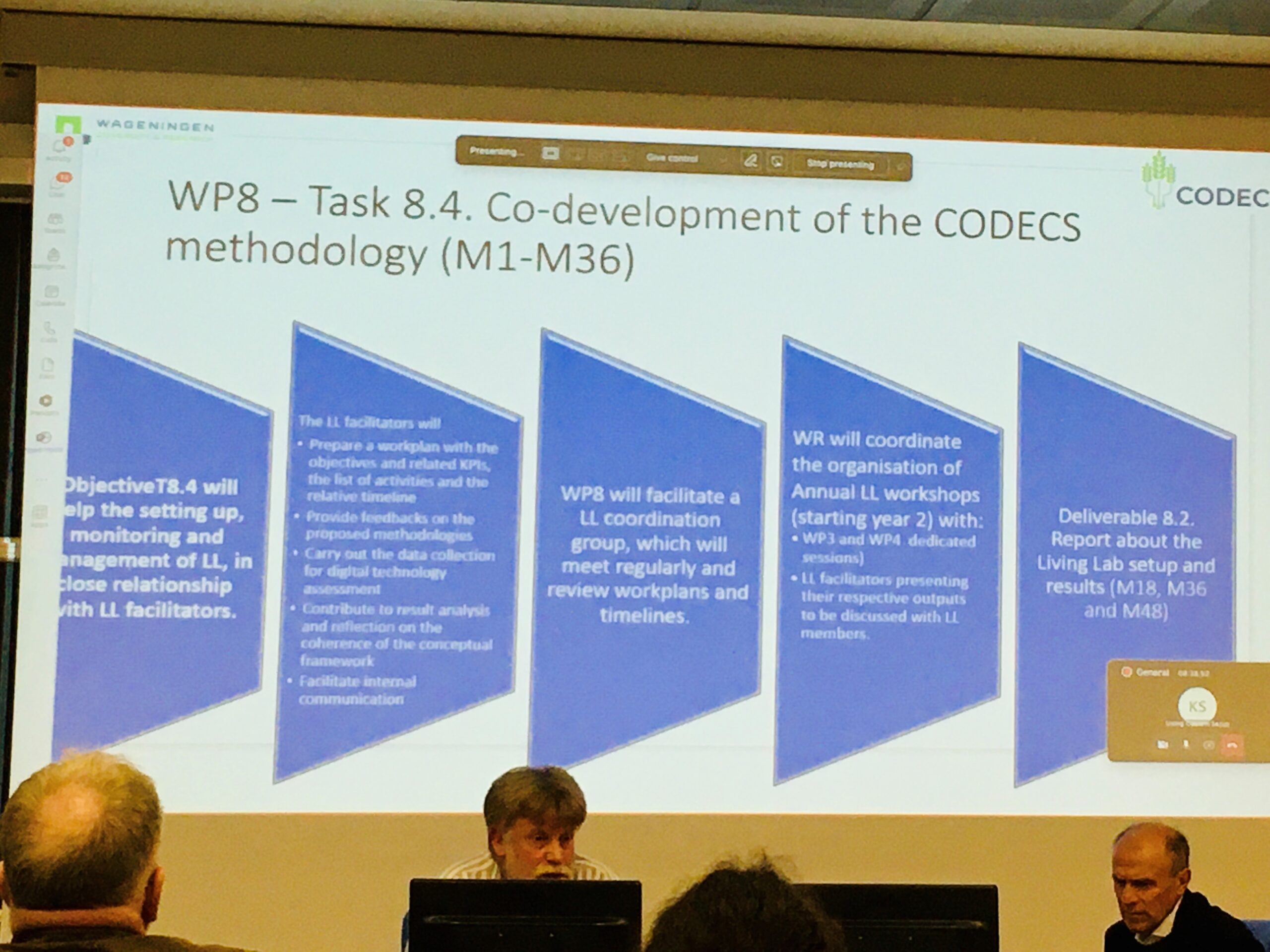
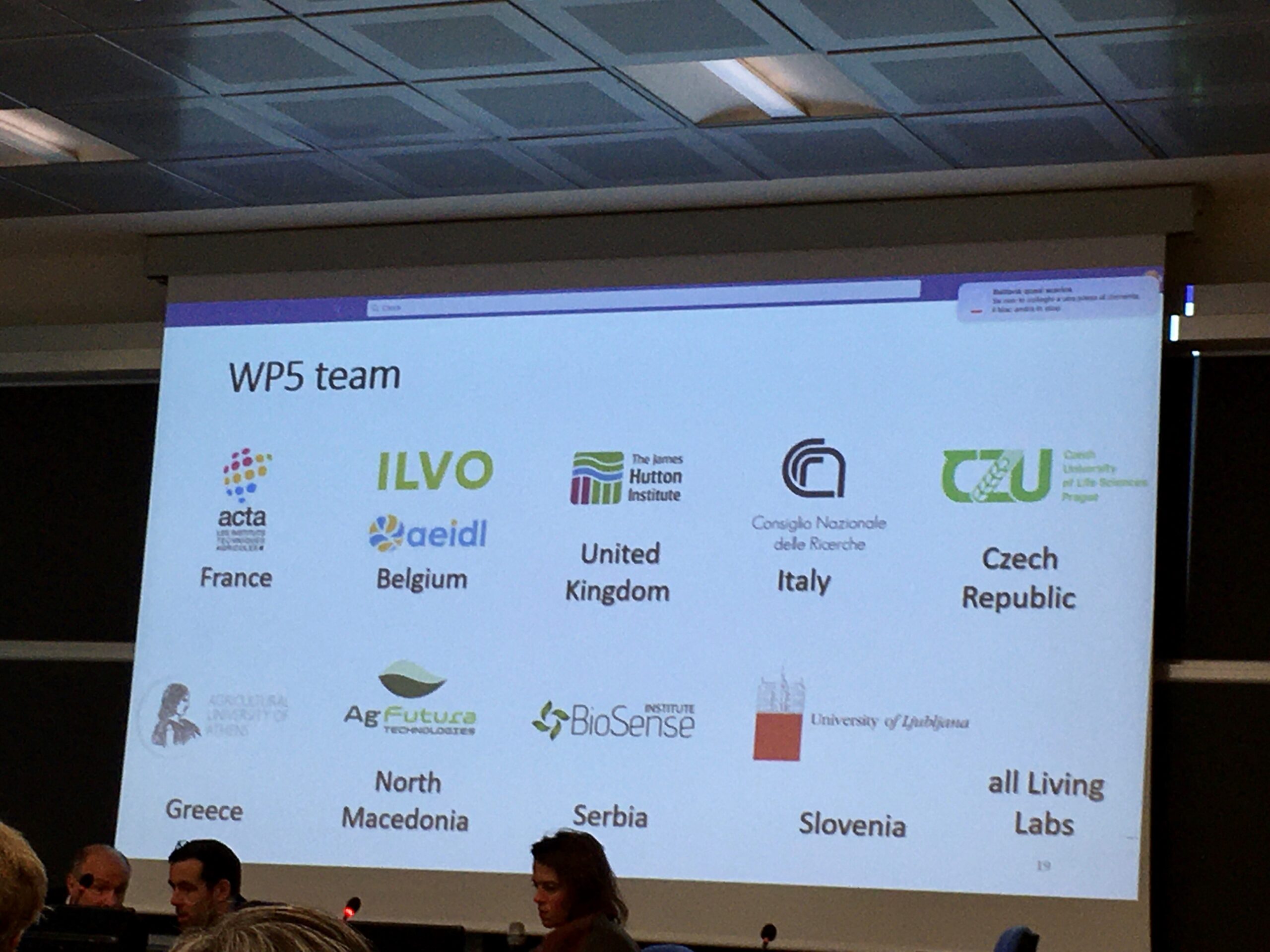
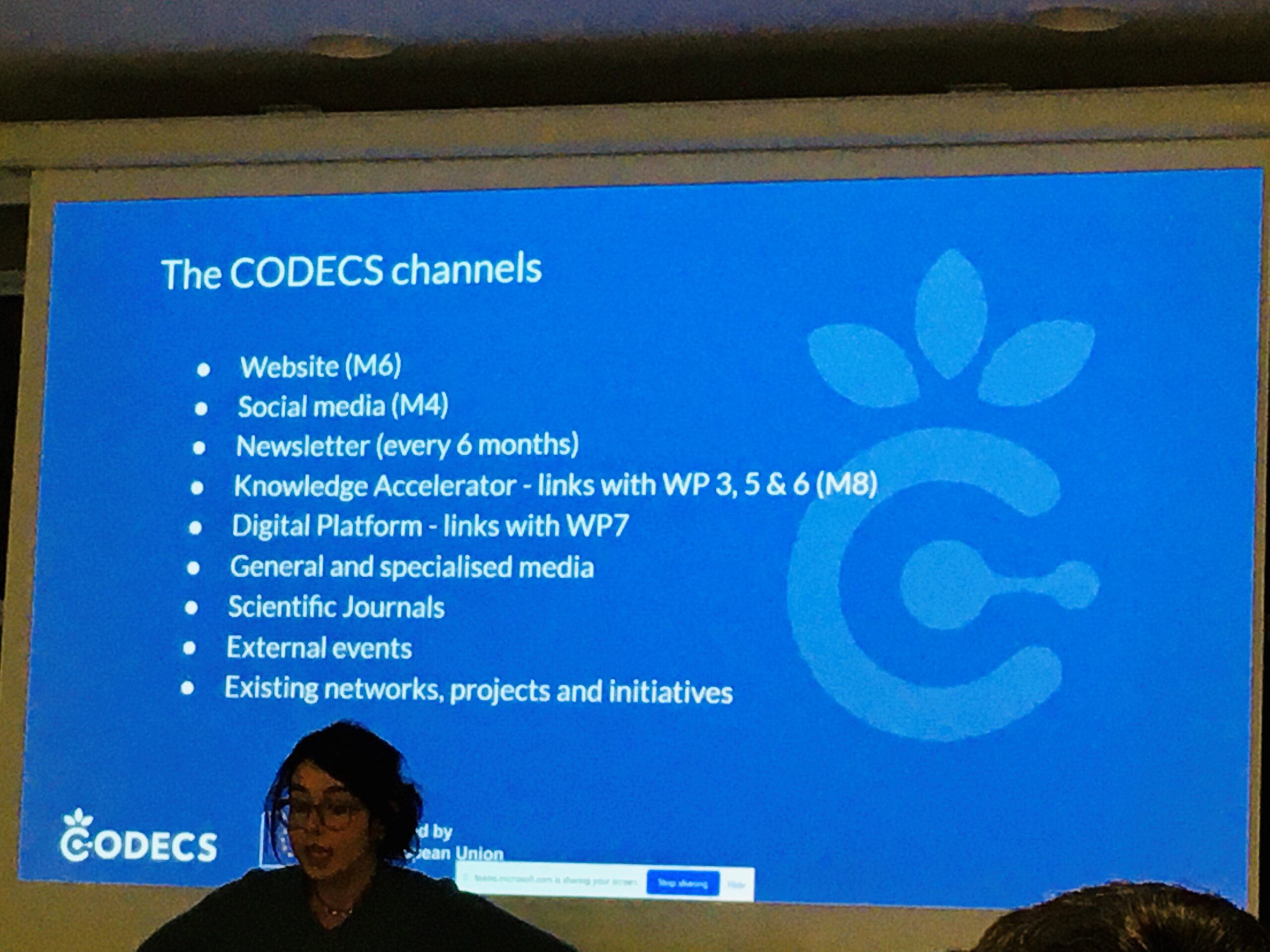
Věra Motyčková, MA participated as a representative of the CSITA, z.s. organisation in the project Kick-off Meeting, which took place in Pisa, Italy on 13-14 December 2022 in a hybrid format. The Horizon Europe project Maximising the CO-benefits of agricultural Digitalisation through conducive digital ECoSystems (CODECS) is implemented by 33 organisations led by the University of Pisa, Italy. In this project, CSITA closely cooperates with the Department of Information Technologies (DIT), Faculty of Economics and Management (FEM) at the Czech University of Life Sciences Prague.
Officially launched on 1 October 2022, CODECS aims to increase the motivation and capacity of European farmers to use digitalisation as an enabler for sustainable and transformative change. The project aims to improve the ability to understand, assess, and predict the full range of benefits and costs associated with farm digitisation, and to build digital ecosystems that maximise the benefits of digitisation.
CODECS aims to:
- Generate and provide information on the costs and benefits of digital technologies – assessed at different scales and in real life – to farmers, advisors, and policymakers
- Explore and create conditions for increasing the capacity of farmers and rural communities to use them
- Make recommendations to local government and policymakers to promote agricultural digital technologies leading to sustainable development.
The project, which will run for four years until September 2026, will build on and capitalise on the results of the DESIRA project. CODECS includes 21 Living Labs spread across Europe. The project will set up a pan-European Knowledge Accelerator consisting of a science-policy interface, an AKIS network, and a network of demo farms.
In CODECS, CSITA leads a newly established Czech Living Lab in orchard farm management. During the project, special sensors will be installed at the farm that will enable monitoring of e.g. sunshine duration, rain quantity and rain weighing, groundwater levels, leaf & bud temperature, and radiation frost events. Such automation will provide useful data to improve orchard management and will make the management of orchards easier.